
SACRPH is a one-of-a-kind community that brings together scholars and practitioners. We are excited to showcase our members’ work and what SACRPH means to them.
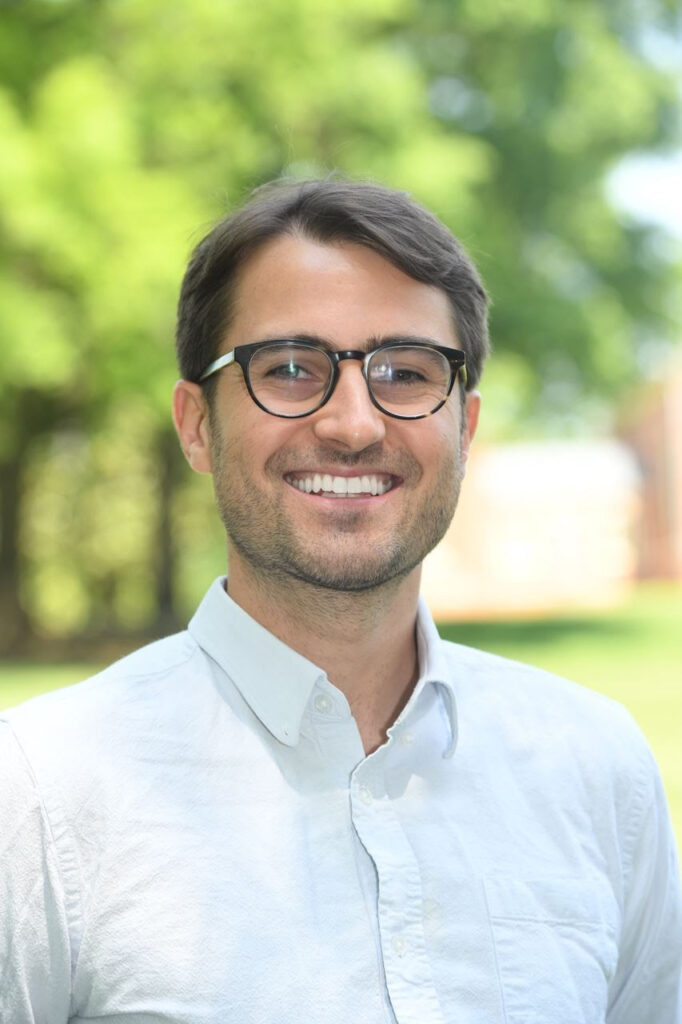
Daniel G. Cumming
Postdoctoral Fellow, History Department at Queens College, City University of New York (CUNY)
Research Associate, “Melting Metropolis: Everyday Histories of Health and Heat in London, New York, and Paris since 1945.”
What are you currently working on?
I’m working on several projects, both as an individual and a collaborator. First, I’m writing a book based on my dissertation—which was honored with SACRPH’s John Reps Prize in 2023. The book examines the rise of a “meds and eds” economy in Baltimore after World War II, detailing how a city home to one of the most renowned medical institutions in the U.S. also shelters some of its most extreme health disparities in neighborhoods surrounding campus. Bringing racial capitalism and environmental injustice into a shared frame, I argue that the making of a deeply unequal, even toxic, postindustrial city was enabled by the remaking of its Jim Crow regime, so much so that today, Johns Hopkins Hospital is well-known among many of its neighbors and employees as “the plantation.” I had the good fortune to turn the dissertation into a manuscript while I was a postdoctoral fellow in Johns Hopkins University’s Chloe Center for the Critical Study of Racism, Immigration, and Colonialism, led by Nathan Connolly and Stuart Schrader. In addition, I’m developing a second book project that will explore the history of rent in the U.S., interrogating its historical role in shaping, exploiting, and plundering a housing system designed for profit over shelter.
In my current position at Queens College, I contribute archival research and oral histories to the project “Melting Metropolis,” which explores postwar histories of climate change in New York, London, and Paris. Supported by the Wellcome Trust, a UK foundation and one of the largest funders of health research in the world, “Melting Metropolis” is a multiyear, interdisciplinary collaboration between Queens College and the University of Liverpool. It brings together a team of 12 scholars working across interdisciplinary fields, including history, ethnography, geography, public policy, performance and fine arts, and community-engaged research, to investigate how long-term climate-change is slowly cooking our cities. With a focus on sensory, community, and cultural experiences, our team explores how urban dwellers have learned to navigate both the joys and challenges of summer heat, though never on equal terms. As temperatures rise, heat risk magnifies in urban geographies fractured along lines of race and class, compounding unevenly in human and environmental health disparities.
For planners and policymakers, urban heat is rapidly becoming a public health crisis: heat-related illness kills over 500 New Yorkers each summer, and Black New Yorkers are more than twice as likely to die from heat exposure than white New Yorkers. Nationwide, heat kills more people every year than all other natural disasters combined. With several publications already in the works, our team aims to bridge social science and climate science. Through these collaborations, my own research has grown new dimensions at the historical intersections of housing, energy, financialization, and disaster studies.
“Melting Metropolis” is also committed to community and public engagement, and in New York City, we’ve created a local storyteller project with nonprofit institutions, including Queens Memory Project (Queens Public Library), King Manor, and Newtown Creek Alliance. We’re translating our research for the public by writing middle school curriculum with the New York Public Library’s Center for Educators and Schools, presenting to audiences at the New York City Climate Exchange and Climate Week, and collaborating with neighborhood groups and the NYC-Environmental Justice Alliance. We’re also creating public resources with organizations like Urban Archive, which produced an incredible digital map of New Yorkers’ historical and contemporary experiences with summer. You can follow all our work, local and international, at our website.
What most excites you about your field right now?
It feels like we are at a critical moment in our field and across the academy. From my own experience and from what I hear from fellow cohorts, the job market crisis has become so severe that it now feels nearly permanent for recent graduates. And in many ways, our institutions seem ill-equipped to meet the challenge, especially as the federal administration intensifies its assault on higher education and right-wing fanatics seek to intimidate scholars committed to accurate history amid racist, nationalist, fascistic propaganda.
Still, there is much to be excited about. Colleagues building solidarity across our universities are charting the way forward, organizing to reimagine the university itself. As historians, I think we have an opportunity to craft thorough, well-researched—and compelling!—narratives to help explain the stakes of the moment. We can write important books for the field that also reach wide audiences, and we can teach publicly in ways that engage in the fight over our past and present, thus our future. In that sense, I’m most excited by those pushing us to think big and think bold. For example, new histories on the extractive sinews of racial capitalism, such as Bench Ansfield’s Born in Flames and Andrew Kahrl’s Black Tax, are rewriting the field and expanding it beyond the academy. Historians doing the hard work of demystifying complicated political-financial systems that shaped the postwar metropolis are also reframing the field’s central questions for wider audiences, such as Destin Jenkins in Bonds of Inequality and Michael Glass in Cracked Foundations. And finally, historians writing about the post-civil rights era are pushing us all to rethink dominant paradigms about urban politics and neoliberalism, especially Danielle Wiggins in her hot-off-the-presses book, Black Excellence.
Why did you join SACRPH?
I joined SACRPH early in my graduate career and found a welcoming community for younger scholars looking to present work, exchange ideas, and find mentors. SACRPH allowed me to build an academic network among fellow historians, as well as encounter new perspectives from scholars who approach city and planning history from a range of perspectives. In my experience, SACRPH is a great supporter of early career scholars, and I couldn’t imagine my graduate and postgraduate years without the organization’s robust intellectual community.