

All tours will take place on Friday, October 16, 2026. Walking tours cost $10 each and bus tours cost $30 each. Walking tours will run regardless of registration levels but bus tours are subject to registration minimums.
Morning Tours
Nuclear History and Nature at the Fernald Preserve Bus Tour
- 8:30 am – 12:30 pm
- Tour Guides: Casey Huegel, University of Cincinnati, & Jason Krupar, University of Cincinnati
- Max Capacity: 50
- Accessibility: This tour will contain moderate walking. Come prepared for the weather.
- Starts at Arts & Sciences (A&S) Hall
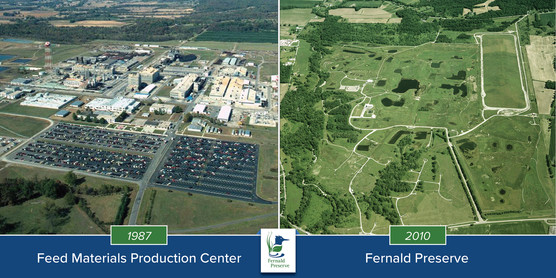
Bring your binoculars for a tour of the Fernald Preserve! Seventy-five years ago, a small community northwest of Cincinnati called Fernald was selected by the Atomic Energy Commission for the Feed Materials Production Center, the nation’s first fully integrated uranium processing facility and the “first link” in the Cold War nuclear weapons complex. After several decades of production for the nuclear arms race, a “uranium leak” at the plant helped launch a grassroots environmental movement led by women in the Fernald Residents for Environmental Safety and Health who fought to clean up the nuclear waste in their backyard. 2026 marks twenty years since the completion of Fernald’s ten-year, $4.4 billion Superfund cleanup, which dismantled the site’s factories, remediated and isolated its radioactive waste, and ecologically restored the landscape. The 1,050-acre Fernald Preserve, a birding hot spot, features seven miles of hiking trails through wetlands, grasslands, and forest, and many opportunities to engage the site’s complex history, including interpretive waysides, a self-guided exhibit gallery, and films. Historians from the University of Cincinnati and professional interpreters will be onsite to guide you through Fernald’s remarkable transformation from production to cleanup and discuss its current mission to educate the public and monitor and remediate the Cold War’s environmental legacy.
Mariemont: The National Exemplar Bus Tour
- 9:00 am -12:00 pm
- Tour Guide: Bruce Stephenson, Rollins College
- Max Capacity: 50
- Accessibility: This tour will contain moderate walking. Come prepared for the weather.
- Starts at Arts & Sciences (A&S) Hall
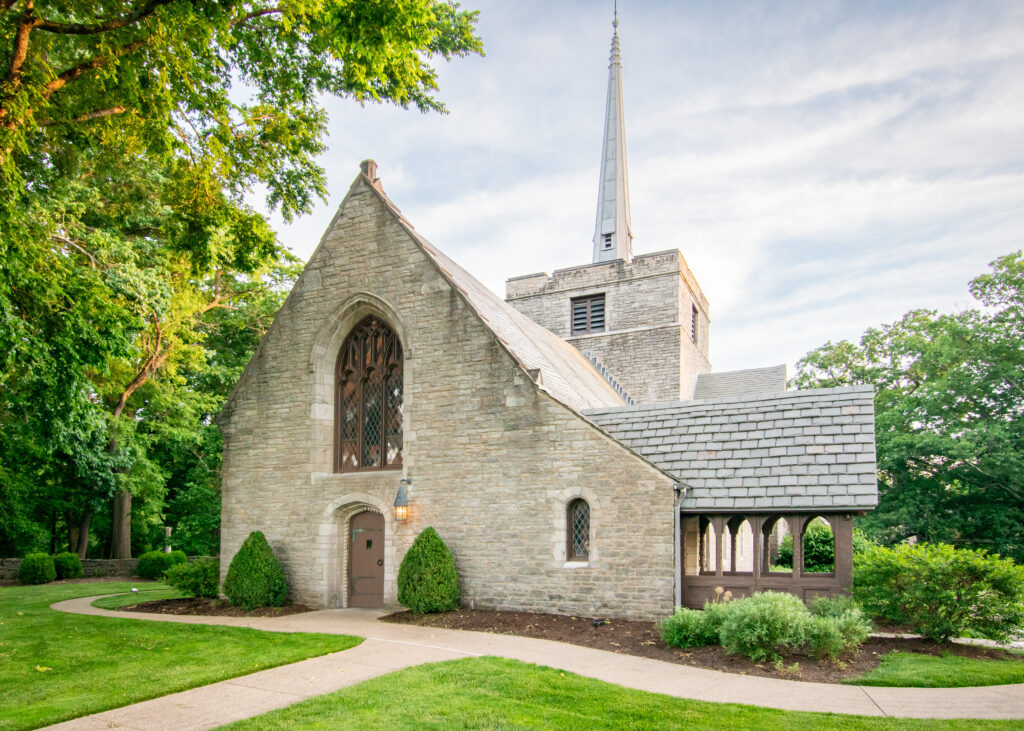
The Mariemont tour will follow the historic progression of John Nolen’s new town, which is listed on the National Historic Register. While a student at the University of Munich, Nolen was influenced by Camillo Sitte’s The Art of City Planning, and it was the text he consulted for his month-long 1902 study of Tuscany. The tour will examine the neo-Renaissance lines he employed at Mariemont with Dale Park, envisioned as a working-class neighborhood modeled on the English Garden City, the starting point. The pedestrian-scaled experience will take in The Mariemont Community Church, inspired by Anglo-Norman parish churches of the 12th and 13th centuries, the recent group of neo-classical townhomes, and the Concourse, a scenic overlook of the Little Miami River.
SOLD OUT — Gentrification in Historic Over-the-Rhine Walking Tour
- 10:00 am-12:00 pm
- Tour Guides: Anne Delano Steinert, University of Cincinnati, & Mary Burke Rivers, Over-the-Rhine Community Housing
- Max Capacity: 25
- Accessibility: This tour will contain extensive walking. Come prepared for the weather.
- Starts at Over-the-Rhine Community Housing, 114 West 14th St; Ends at Findlay Market
Cincinnati’s Over-the-Rhine was one of the most densely populated neighborhoods in 19th-century America. Originally settled by German immigrants, the neighborhood has housed successive groups, including Appalachian migrants and African Americans displaced by urban renewal in the nearby West End. A strong people’s housing movement emerged in Over-the-Rhine in the 1980s to protect the needs and voices of low-income residents. When the 2001 police shooting of an unarmed Black teen set off a wave of civil unrest, business and political leaders joined together to create a community development corporation to facilitate yet another wave of neighborhood change. This tour will explore the history of housing and activism in Over-the-Rhine with an emphasis on gentrification since 2001.
Afternoon Tours
SOLD OUT — Greenhills: New Deal New Town Bus Tour
- 1:00 – 4:00 pm
- Tour Guides: Beth Sullebarger, Independent Scholar, Julie Turner, Independent Scholar, & Mayor David Moore, Village of Greenhills, Ohio
- Max Capacity: 30
- Accessibility: This tour will contain moderate walking. Come prepared for the weather.
- Starts at Arts & Sciences (A&S) Hall
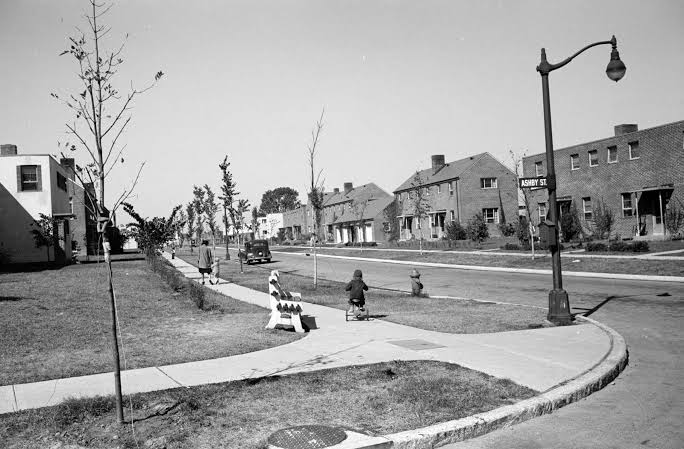
Greenhills is one of three greenbelt towns built by the U.S. Resettlement Administration between 1935 and 1938. It represents one of the federal government’s earliest efforts to solve urban problems. This New Deal project was the largest experiment in garden city planning ever undertaken in the U.S. Funded by a $31 million appropriation through the Emergency Relief Act of 1935, the Greenbelt Town Program sought to provide a model for suburban planning and development, borrowing basic design principles from Ebenezer Howard’s Garden City concept and Clarence Perry’s Neighborhood Unit Plan. Other sources include Mariemont by John Nolen; Radburn, NJ, by Clarence Stein and Henry Wright; and Norris, TN, by Earle Sumner Draper, Tracy Augur, and Roland Wank. The village plan incorporated the basic elements of garden city suburban development in its use of a curvilinear street plan with five superblocks composed of cul-de-sacs and lanes, a commercial/civic center, town common, and a surrounding greenbelt, all of which remain basically intact. The village was named a National Historic Landmark in 2017.
University of Cincinnati Campus History and Planning Walking Tour
- 1:30 – 4:00 pm
- Tour Guides: Greg Hand, Cincinnati Magazine, Davarian Baldwin, Trinity College, and Joss Kiely, University of Cincinnati
- Max Capacity: 25
- Accessibility: This tour will contain moderate walking. Come prepared for the weather.
- Starts at Conference Registration Desk
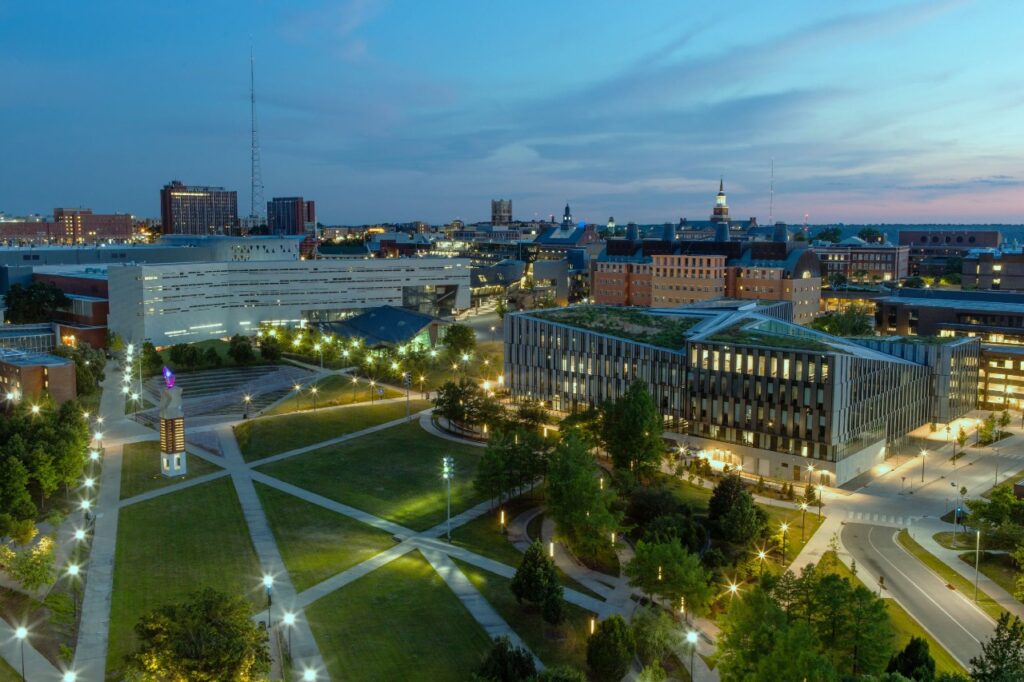
This tour will explore the history and future of the University of Cincinnati’s Burnet Woods campus. Originally a public park, the university moved into Burnet Woods in the 1890s. Through multiple expansions north into the park and east into neighboring Corryville, UC has carved out a distinctly urban collegiate experience in which athletic facilities are embedded in the heart of a dense hilly urban campus. This tour will explore the campus’ earliest buildings, subsequent expansions, and the stunning 1991 Campus Masterplan by Hargreaves Associates which used clever landscape strategies to unify a patchwork of existing campus buildings and transformed the campus “from one of a commuter campus – dominated by roads and parking lots, to a pedestrian-oriented campus with new buildings and open spaces that created a dynamic campus that now promotes the quality of student life.” Finally, historian Davarian Baldwin will discuss UC’s history of campus expansion and its most recent move into the adjacent historically African American neighborhood of Avondale.
SOLD OUT — From Industry to Recreation: Cincinnati & Northern Kentucky Riverfront Walking Tour
- 1:30 – 4:00 pm
- Tour Guides: Elizabeth Keslacy, Virginia Tech, & Wade Johnston, Tri-State Trails
- Max Capacity: 25
- Accessibility: This tour will contain extensive walking. Come prepared for the weather.
- Starts at Reds Hall of Fame and Museum, 100 Joe Nuxhall Way; Ends at same location
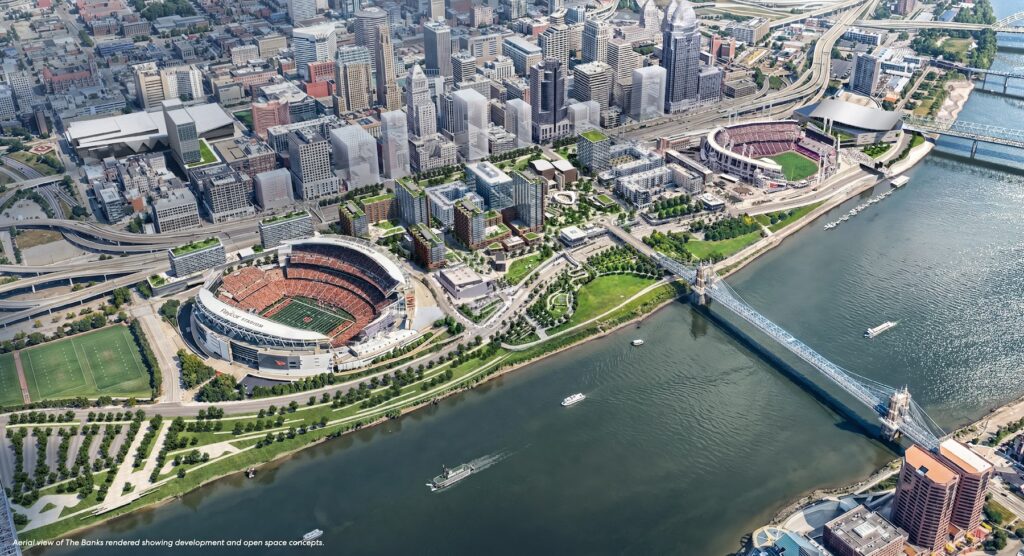
The Cincinnati riverfront was once home to boatbuilders, meatpackers, and a busy port. As in other Rust Belt cities, it declined in the early twentieth century, eventually cut off from the rest of downtown by interstate highways. Starting in the late 1960s, the city revitalized the waterfront, responding to demands for flood control and public access. This tour will detail the 20th-century evolution of the Cincinnati and Newport riverfronts.
We will compare the approaches taken by these two cities – on the Cincinnati side, new parks, stadiums, museums, bars, and restaurants transformed the river into a recreational and cultural destination; while on the Newport side, the city reinvented itself as a center for family entertainment with an aquarium, multiplex theater, and indoor recreation options while also reinvigorating its reputation as a destination for gambling and nightlife. More recently, the cities have paid greater attention to their connection, creating links across the river using bike trails and the pedestrianization of a former railroad bridge. Highlights will include Smale Park, the Serpentine Wall and Concourse Fountain at Yeatman’s Cove, Sawyer Point, the Purple People Bridge, and Newport on the Levee to discuss the interconnection of ecology, infrastructure, and development.