
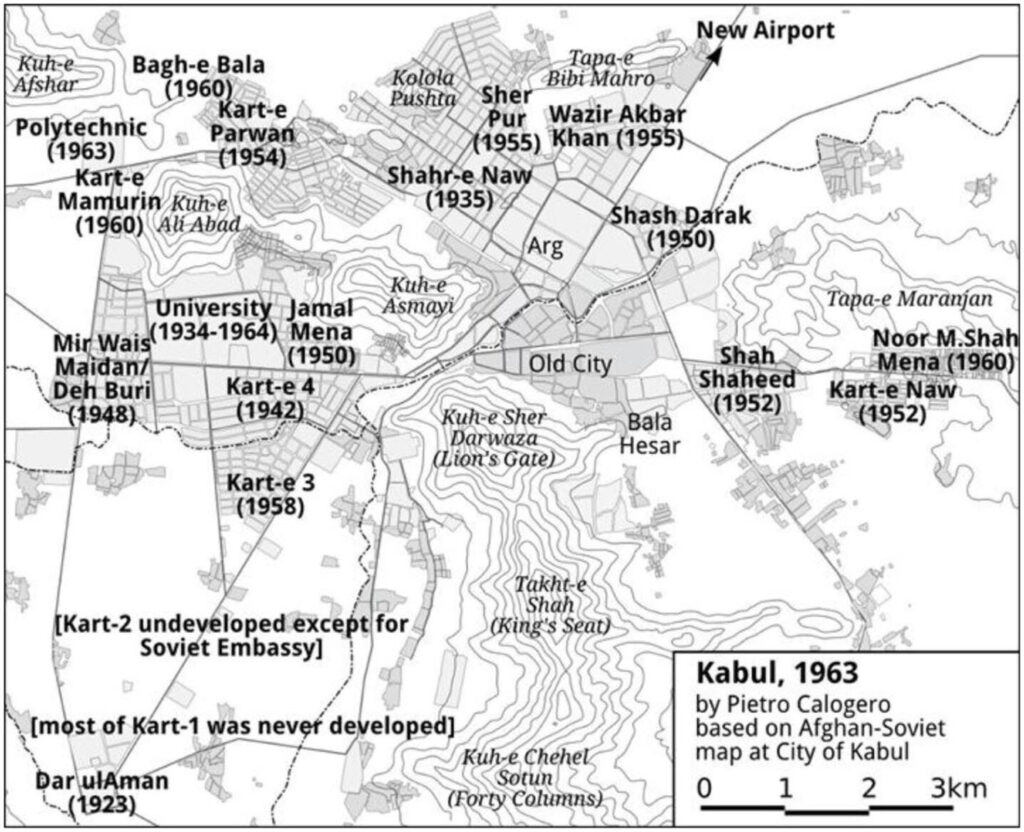
In “Government Policies on Urban Public Spaces in Kabul During the Reign of Mohammad Zahir Shah (1933–1973),” Ali Yaser Jafari examines how a distinct transformation occurred under Mohammad Zahir Shah (1933–1973) in Afghanistan. This study examines Kabul’s urban policies during Zahir Shah’s rule, focusing on modernization processes influenced by Western and Soviet planning models. The establishment of a modern municipality, collaboration with foreign experts, and the adoption of the Soviet-inspired Macrorayon housing system marked a shift toward state-led, technocratic urbanism. Although these transformations modernized Kabul’s spatial structure, they also erased many historical and cultural layers, producing a hybrid cityscape where socialist rationalism and Western aesthetics coexisted in tension with traditional urban identity.