

Lewis Mumford Prize
The Lewis Mumford Prize is awarded to the best book in American (United States and Canada) city and regional planning history.
Transnational or comparative histories that include the United States or Canada are also eligible but as of 2026 may be nominated only for this prize or the Global Book Prize, not both.
Michael R. Glass, Boston College
Cracked Foundations: Debt and Inequality in Suburban America (University of Pennsylvania Press, 2025)

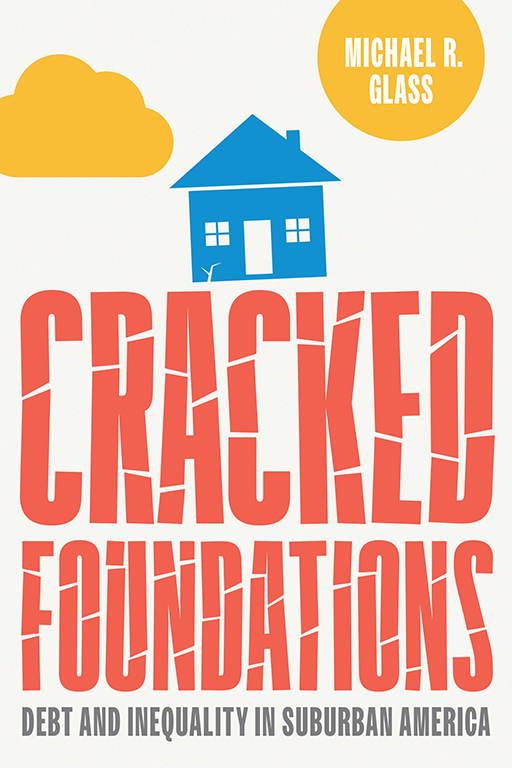
Michael Glass’s Cracked Foundations: Debt and Inequality in Suburban America is a deeply researched and historiographically sophisticated contribution to the study of modern suburban inequality. Glass excels at connecting local housing developments, municipal policies, and financial systems to broader national transformations in American capitalism. One of the book’s greatest strengths is its interdisciplinary approach, blending urban history, political economy, geography, and social history into a clear and compelling narrative. Rather than treating suburbs as uniformly prosperous spaces, Glass demonstrates how debt structures, racial exclusion, and uneven development produced profound inequalities beneath the surface of postwar suburban growth. His careful use of archival sources, demographic data, and policy analysis allows him to situate suburbanization within larger debates about neoliberalism and the reshaping of the American middle class. The book makes an important historiographical intervention by showing that suburbs were not peripheral to inequality, but central to its expansion across metropolitan regions (encompassing the privileged and less privileged alike) in the late twentieth-century United States.
Committee: Alex Sayf Cummings, Brian Goldstein, Mike Amezcua
Global Book Prize
The Global Book Prize is awarded to the best book on city and regional planning history whose focus is outside the United States and Canada.
Transnational histories that include the United States or Canada are also eligible but may be nominated only for this prize or the Lewis Mumford Prize, not both.
Kenny Cupers, University of Basel
The Earth That Modernism Built: Empire and the Rise of Planetary Design (University of Texas Press, 2024)

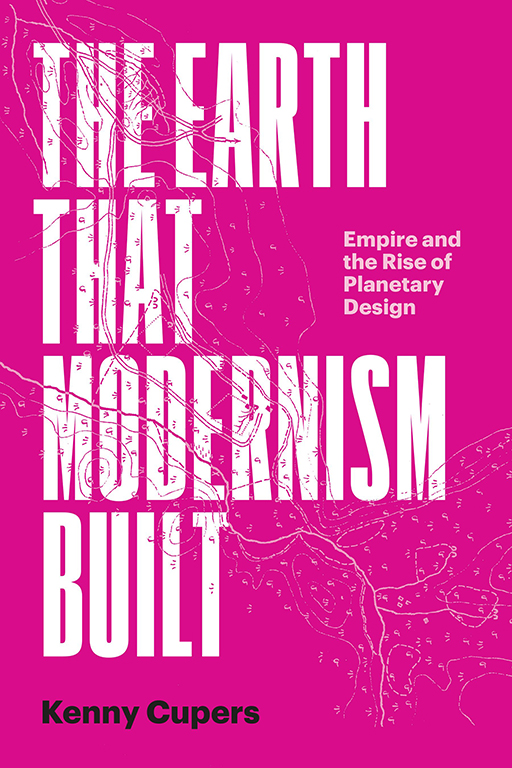
The Earth that Modernism Built offers nothing less than a reconsideration of the origins of modern physical planning. Its impressive combination of deep, archival research and a transnational perspective, centered on German theorists and policies between the 1880s and 1930s, bolsters a well-written and well-illustrated account of how the global reach of modern design is rooted in imperialist ambitions to reshape the land itself. Kenny Cupers shows how the German notion of rootedness or earth-boundedness (Bodenständigkeit) is expressed in two German settler colonial ventures rarely examined together, one in Prussian Polish lands and the other in Namibia. From there, he broadens our understanding of modernism’s “belief in the socially transformative potential of design” that encompassed not just the functionalist doctrines associated with the Bauhaus but also those of its conservative opponents, as all of them proposed to root buildings and settlements in the very soil. We learn of the influence of nineteenth-century soil science as well as doctrines of homeland protection (Heimatschutz), later coded as reactionary, on environmental inquiry, which, in turn, shaped imperial assumptions about what was natural, what kind of settlement was appropriate, and who belonged there.
From Friedrich Ratzel’s influential nineteenth-century geographical determinism (including his concept of Lebensraum), via colonial settlements built upon ethnic cleansing and genocide, to Weimar-era allotment gardens alongside new housing projects and, finally, Herman Sörgel’s astonishing scheme to drain the Mediterranean Sea in order to create a racially hierarchical Euro-African empire, Kenny Cupers has woven together disparate strands of planning history in a thoughtful and sobering synthesis.
Committee: Jennifer Mack, Isabelle Gournay, Brian Ladd
Catherine Bauer Wurster Prize
The Catherine Bauer Wurster Prize is awarded to the best peer-reviewed article in American (United States and Canada) city and regional planning history.
Brent Cebul, University of Pennsylvania, and Michael R. Glass, Boston College
“Mortgaging Out: FHA Credit Policy, Segregated Rental Housing, and the Remaking of Metropolitan America,” Journal of American History 112, no. 1 (June 2025)

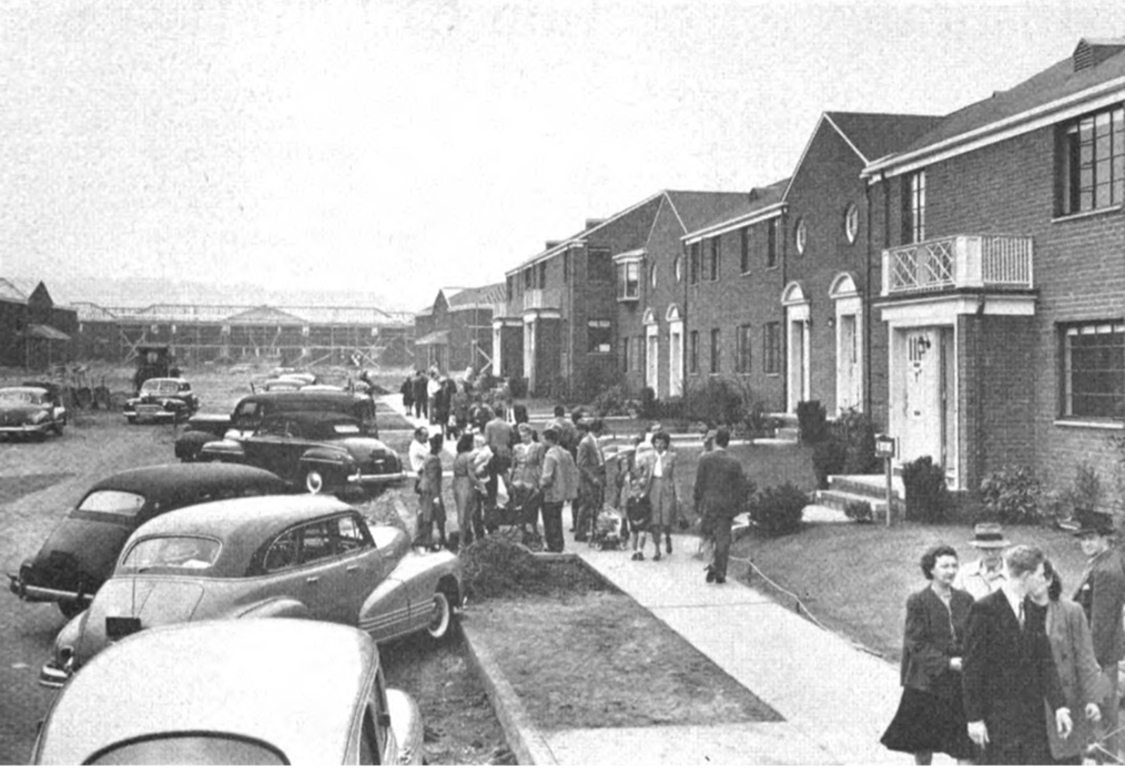
Brent Cebul’s and Michael R. Glass’s “Mortgaging Out: FHA Credit Policy, Segregated Rental Housing, and the Remaking of Metropolitan America” argues that the credit liberalization afforded by Congress during World War II as part of the United States’ defense housing program, later extended until 1950, along with builders’ practices of speculation and profiteering, played an essential role in deepening spatial inequalities and segregation in American cities. Using Congressional hearings and a database of apartment complexes that the Federal Housing Administration insured under the emergency program, Section 608 of the National Housing Act, Cebul and Glass account for the actions of private builders in legally obtaining outsized mortgages for often-shoddy projects on inexpensive land, and the consequences: a mismatch between the quality of housing and rent, which saddled tenants with poor conditions and the burden of large mortgages while builders pocketed “windfall” profits. By illuminating the extent of housing built under the program in cities such as Chicago, Cleveland, and New York, and the conundrum facing lawmakers as they sought to promote affordable housing without profiteering, Cebul and Glass suggest that the policy, and the urban development patterns it fostered, ultimately led to the decline of multifamily rental housing. For its timely topic, evidence, and arguments linking federal policies to building practices, “Mortgaging Out” is a distinguished example of scholarship in American and regional planning history.
Committee: Clare Robinson, Robert Bruegmann, James Zarsadiaz
Journal of Planning History Prize
The Journal of Planning History Prize is awarded to the best article published in that journal, with no geographical restriction.
Andrew H. Whittemore, University of North Carolina Chapel Hill
“Origins of Deed Restrictions in the United States: The Case of Early-Nineteenth Century Boston,” Journal of Planning History 23, no. 3 (August 2024)
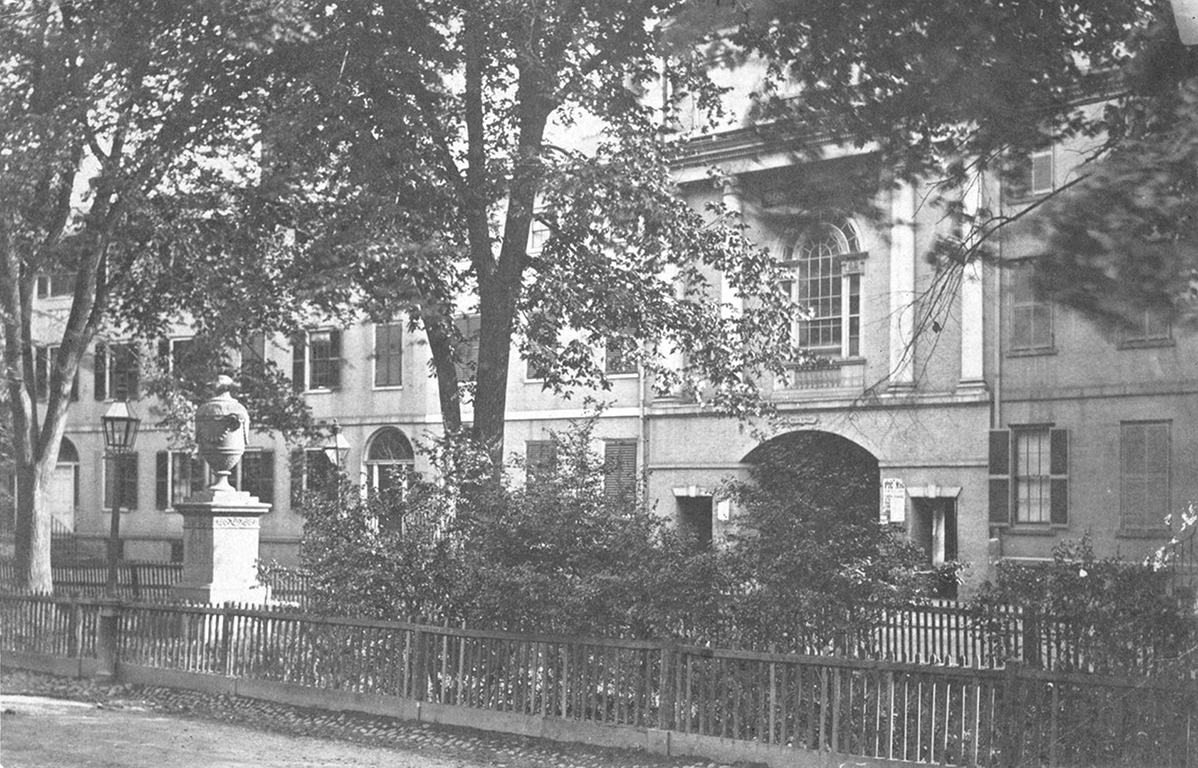
Andrew H. Whittemore’s “Origin of Deed Restrictions in the United States” advances understanding of the evolution of an important land use tool through clear and persuasive analysis of deep archival sources. It sheds light on planning approaches from Europe to the United States, complicates the social geography of early nineteenth-century cities, and is clearly situated in the literature of urban and planning history. More than simply reperiodizing planning history, it presents a fundamental inquiry into the origins of an American approach to land-use regulation. Whittemore’s research into deeds is exhaustive and impressive, and yields insights quantitative and richly qualitative, illuminating both the extent of exclusion and the rationales given for it. Jurors were impressed with the balance between a spatial perspective—engaging maps, zones, and other representations of land as seen or imagined from above—and attention to buildings, squares, and other particular places. Louisburg Square is well known to people with an interest in Boston but the author embeds it in a broader network of actors, showing how they managed to extract new lessons, techniques, and categories from its case. Whittemore’s article builds upon much classic literature in planning history and the history of Boston, advancing decades of work. Well written, it attends to a crucial period that histories of zoning often neglect.
Committee: Gail Dubrow, Carl Abbott, Peter Ekman
John Reps Prize
The John Reps Prize is awarded to the best doctoral dissertation and best master’s thesis in American (United States and Canada) city and regional planning history.
dissertation
Joshua Lappen, University of Notre Dame
“Cultures of Power: Electrification, Politics, and Visibility in Greater Los Angeles,” PhD diss. in history, University of Oxford, 2024.

Capacious in its scope, Joshua Lappen’s treatment of Los Angeles’s electrification intertwines cultural and environmental history, urban development, and political economy. In showcasing his striking, oftentimes visual evidence mined from dozens of wide-ranging archival collections, Lappen demonstrates how into the early 20th century, various actors based their visions of modernity for the city more on electricity’s visibility as a “medium of social expression” than on its functional significance as infrastructure. Written in elegant prose and already nearly in book form, the dissertation examines the roles of real estate speculators, architects, corporate executives, employers, municipal bureaucrats, voters, and leaders of political and religious movements (among others) in co-creating “a new model of American urbanism which provided generations of Southern Californian boosters with their greatest export.” Just as profoundly, Lappen traces a subsequent reversal which made electricity less visible by the 1950s, in response to changing sensibilities around air pollution especially. In so doing, he helps to periodize electrification’s cultural and social significance by identifying an endpoint left unspecified by previous scholarship.
master’s thesis
Arden B. Jordan, Pennsylvania State Historic Preservation Office
“Community-Building as Neighborhood Preservation: A Case Study of Cedar Park in Postwar West Philadelphia,” M.S. thesis in historic preservation, University of Pennsylvania, 2024
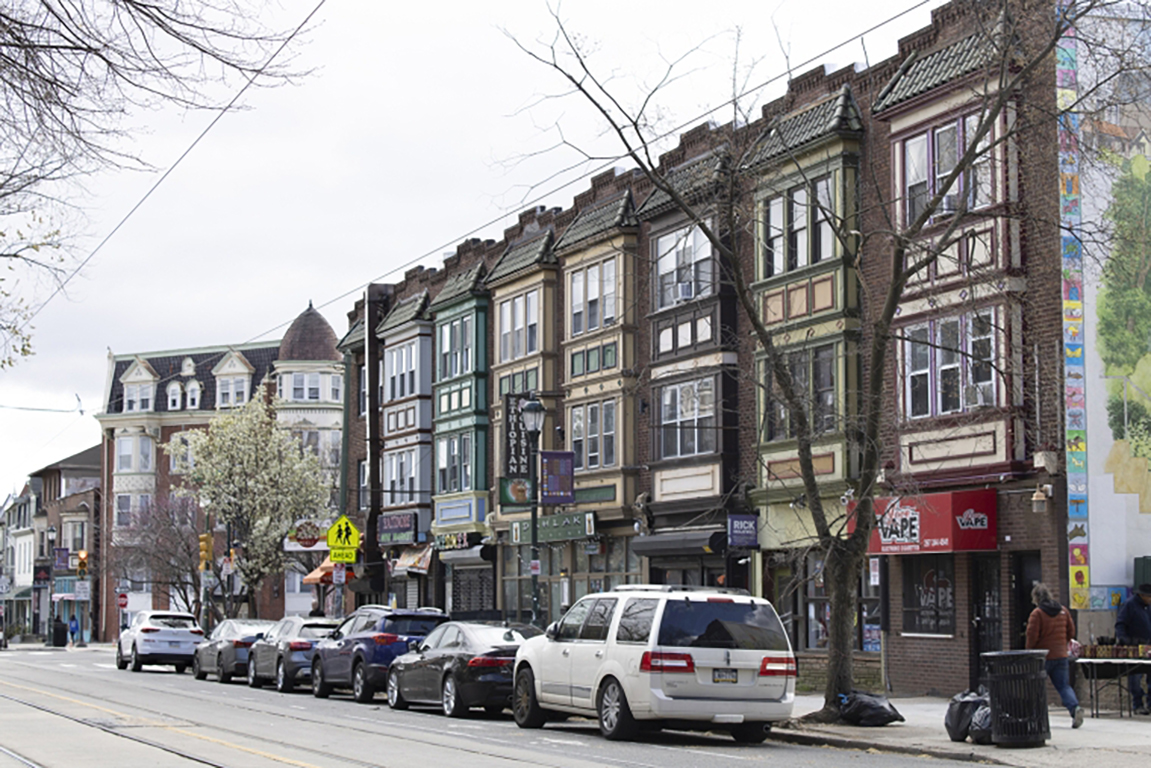
Ambitious yet focused, Arden B. Jordan’s study of the Cedar Park neighborhood in West Philadelphia illustrates a dynamic whereby activism can challenge prevailing views of historic preservation. Centering on the residents themselves (“the people”) as actors in an ongoing process of community-building, the thesis uncovers how several organizations, starting with Cedar Park Neighbors in 1963, grappled with white privilege, LGBTQ+ sexuality, refugee resettlement, and gentrification as they worked to “preserve the social fabric” in this area located in a portion of the city hit especially hard by disinvestment. Whereas formally trained preservationists tend to emphasize the inherent value of historic structures, Jordan finds resident-activists in Cedar Park thought more pragmatically in terms of such buildings’ adaptive reuse-value, as well as “the harm they represented when vacant.” Ongoing efforts to maintain the neighborhood’s vitality are offered as a set of “preservation tools” that could potentially lead to more successful outcomes elsewhere.
Committee: Todd M. Michney, Kathe Newman, David Freund
Ángel David Nieves Prize
The Ángel David Nieves Prize is awarded to the best digital or public humanities project on city and regional planning history, including student projects, no geographical restriction.
Kendra D. Boyd, Rutgers University-Camden
“Detroit Black Business: Mapping Black Business Loss Caused by Urban Redevelopment,” https://freedomenterprise.org/, 2025
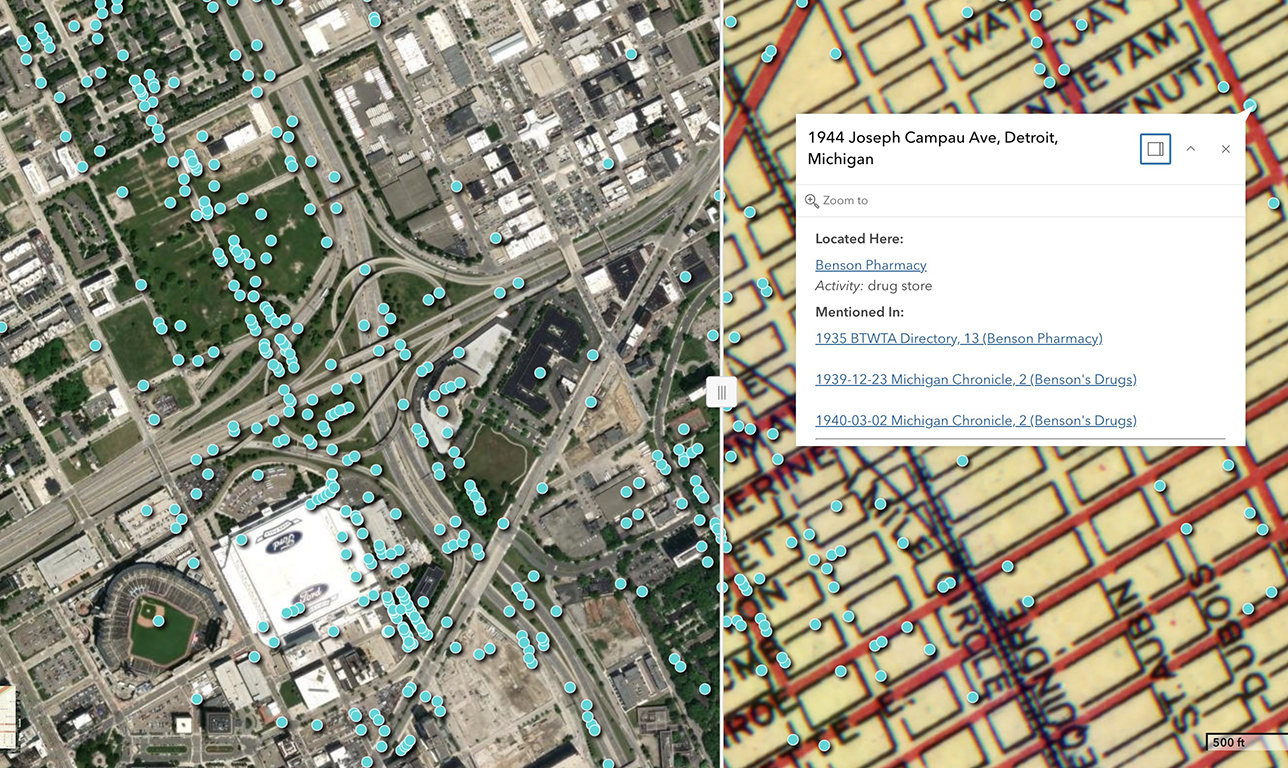
“Detroit Black Business: Mapping Black Business Loss Caused by Urban Redevelopment,” a database and map developed by Kendra D. Boyd with Jesse Bayker, recreates the entrepreneurial ecosystem of Black Detroit that urban renewal disrupted, displaced, and, in some places, destroyed in the mid-twentieth century. Detroit Black Businesses‘ user-friendly interface (including drop-down menus and geocoded historical maps) empowers students and scholars to explore the range, concentration, segregation, and integration of Black businesses in the city during first half of the twentieth century or to pinpoint Black enterprises operating on streets and blocks transformed by city planning and spatial violence. Building on Boyd’s Freedom Enterprise: Black Entrepreneurship and Racial Capitalism in Detroit (University of Pennsylvania Press, 2025), this web resource’s multimedia sources—advertisements, news clippings, and directory listings for over 1,500 businesses—makes the hustle and bustle of the Black metropolis digestible without losing sight of the larger cityscape of Black entrepreneurs, their investors, insurers, and consumers. Well-edited and –designed, this Detroit-focused digital scholarship invites city and regional planning history to include minoritized individuals and marginalized institutions that once made urbanism marketable, familiar, and affordable to migrants both domestic and foreign.
Committee: Fallon Aidoo, David Schalliol, Ellen Shoshkes
Laurence Gerckens Prize
The Laurence Gerckens Prize is awarded to an outstanding teacher-scholar who has demonstrated sustained excellence in scholarship, teaching, and leadership in the field of planning history.
Alison Isenberg, Princeton University

A dynamic teacher, renowned scholar, thoughtful institution-builder, and remarkable collaborator, Alison Isenberg best embodied the SACRPH Laurence Gerckens Prize’s principle of sustained excellence in research, civic engagement, membership, and leadership in the field of planning history.
Isenberg’s research thoughtfully engaged alternative pathways for city planning and participatory citizenship. Her research inspired her to encourage community-academic collaborations, which showcased the power of public urban history projects. She worked with a number of community artists to help illustrate the power and potential of city life. As she once shared, “By accessing a city through the photographic record, you just ask different questions. You see different things.” Throughout her thirty-year scholarly and teaching career, she had a vast impact on students, colleagues, and the broader urban planning profession.
Through her service, Isenberg became widely known for astutely mentoring students, building innovative programs in urban history and urban studies, while maintaining a rigorous academic practice and exhibiting grace and accessibility. Her thoughtful leadership benefited SARCPH when she was elected president in 2009. That same year, she brought her collaborative spirit to the role, facilitating a dynamic plenary session on regional equity and planning and leading community tours of alternative agriculture sites at the SARPH Conference. Isenberg was also instrumental in establishing SARCPH’s Journal of Planning History. Alison was an incredibly generous scholar and teacher who delighted in connecting with researchers across disciplines and in elevating the work of those around her. She hosted book launch events for her graduate students, brought younger scholars into the fold of professional organizations, and became such a valued and inspiring mentor, colleague, and organizational leader, especially at SACRPH.
Committee: Rosemary Ndubuizu, Rachel Weber, Mark Rose
Graduate Student Paper Prize
The Graduate Student Paper Prize is awarded to best paper on American city and regional planning history (United States and Canada) by a full-time student that has been accepted for presentation at the biennial conference.
To be announced at the 2026 conferece.
Committee: Ella Howard, Evan Friss, Meredith Reitan