
As we celebrate SACRPH’s 40th anniversary, our Member Spotlight turns to individuals who were active in the society’s early years.
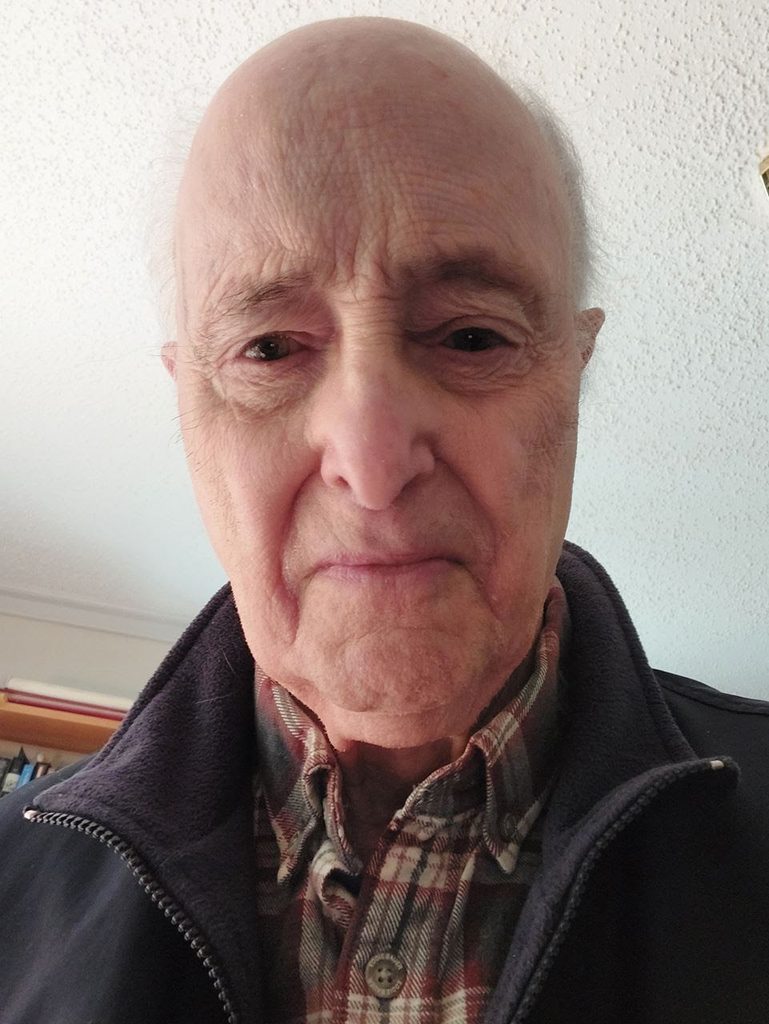
Howard Gillette
Professor of History Emeritus
Rutgers University-Camden
What was your first experience with SACRPH? Who got you involved, and where, when, and how?
My formative experience in SACRPH is unforgettable, and it is only fitting that I recall it in the aftermath of Alison Isenberg’s death. I met Alison in the late 1990s at a conference in Minnesota. The next time I heard from her was a phone call out of the blue asking if I would be willing to step in as the next president of SACRPH. Not surprisingly, I was taken aback. I had attended a few early conferences, though not the first, and I had to admit I had not actually become a member. Alison didn’t miss a beat, assuring me that if I paid the dues, I was in. Besides, she added, it’s all set: you will work with Jack Bauman, who will be president-elect, and together you will plan the next conference in Philadelphia, coinciding with my own transition from George Washington University to Rutgers-Camden. So it was that the fatal illness of SACRPH’s next projected president led to my own election. Whatever could be said of the term that followed, no one has forgotten the effect of the opening reception to that conference. Planned for the mayor’s reception hall in Philadelphia City Hall (the subject of my first published article), I discovered only minutes before guests were to arrive that the caterer had failed to show up. Friends still recall the subsequent bar bill I built up for attendees back at the Doubletree Hotel.
How has SACRPH helped you in your career?
From the start, my career blended scholarship with public engagement. I founded the Center for Washington Area Studies at George Washington and the Mid-Atlantic Regional Center for the Humanities at Rutgers. Each effort intended to make new scholarship available to a broad public. What I have always liked about SACRPH is the exposure to multiple ways of making that happen. Through tours as well as papers and panels, SACRPH conferences have always brought alive issues in immediate ways that might be lost in theoretical discussions.
How has SACRPH changed since you first joined? Where would you like to see SACRPH and the field go next?
Over the years, as participation in the organization grew, we have witnessed a greater range of topics as well as methods. This is all to the good, I think, but I can also see strains as the pinch in both academic support and job opportunities force scholars to cut back their participation, whether it is attending annual meetings or finding the right employment opportunities. SACRPH can and should remain a desirable intellectual home if it continues to combine original scholarship with practical applications. My hope is twofold: that members be encouraged not to compromise the intellectual rigor of their studies or their work and that as they approach planning issues they give as much attention to social justice as to beauty and efficiency. My last book, The Paradox of Urban Revitalization, tests that proposition in nine cities I have had special relationships with over time. The record is quite obviously mixed. That is one reason we write history: to learn from our mistakes. But the tension between utility and social well-being is not insurmountable. Even as we pass through this contentious period of history, we are obliged to apply our knowledge and understanding to making complex urban and regional systems work better for all and not just select constituencies.